'Thin Spaces', by Dr. Richard Brynteson
Lying in my college dorm room bed, still a teen, my dad dropped in for a visit. It wasn't my physical dad; he had passed away a year before while I was in a high school history class. But there he was, present, communicating without words, hovering near me, reassuring me that he was okay, that everything was fine. But everything was not all right; I was an emotional mess, my mom was soaked in gin throughout the day, my brother hid in his sparkling athletic prowess, and my little sister, well, who knows? The kids aren't all right.
For that moment, maybe less, he had returned to reassure me, to bless me with a gift. He wouldn't call it grace; he hated the church. But perhaps I would call it grace. He certainly brought some peace of mind, the peace that passeth all understanding. My dad was not embodied, but his "spirit" was there. Then he was gone, and I was back in my dorm room, alone, facing a pile of books and assignments.
That incident was certainly not the first time I experienced a something, something that was not really "there." Once, as a boy, the landscape turned blue and yellow and shimmered. My mom said, "No, it didn't." But it did. I just had to turn it off. Because it made me seem weirder than I was.
As a teen, I was waterskiing, and the tree-lined shore, the sky, and the azure water dissolved into one, and so did I. It was just for a second, and then the world returned to its proper order. As an adult, at a Christmas Eve church service, all of the candles in that dark, hymn-filled space dissolved into a shimmer, glimmering kaleidoscope of colors. And then, ten seconds later, I was back in the church.
The Celts used the term "thin spaces" to indicate a space where this world and the other world touch. Many religions see All Soul's Day, All Saint's Day, Day of the Dead, and Halloween as a time of universal thin space. The souls of the deceased come back to visit their loved ones. Those on this side may be lucky, frightened, or blessed to experience those on the other side. In Latino cultures, graves are decorated with marigolds, and embodied loved ones have a graveyard party with the deceased's favorite foods and music.
Once, so many years ago, I was tripping on psilocybin mushrooms at an ancient Mayan ruin. Having spent our lunch money on the mushrooms, we stole mustard and ketchup packets to spice up the feces-covered shrooms, just picked out of cow pies. Yum. No lunch, but oddly flavored mushrooms. I walked through the tunnels and was confronted by little Mayan men groping at me in the darkness through the thick cobwebs. I gazed lovingly out at the ocean, 100 miles away from this carved rock ledge. I wandered aimlessly, amazed by moving streaks of light. They were real. They weren't real. I told myself afterward that it must have been the psilocybin. Now, I am not so sure. I may have "rent the veil" on that day. These days, psilocybin seems to help individuals with PTSD rent the veil, between this world and the next, and see the beauty of the earth again. They have become a powerful healing tool for some.
Christian lore also has Christmas Eve as a thin space. It is a time when the angels are closer to earth, celebrating the birth of Jesus. They can see us, but we cannot see them.
The Sufis enter those thin spaces by performing a whirling dance where they transcend this world. Yogis sit on mountain tops and pray, meditate, and fast. Amazonian shamans drink yage to visit the other world.
I enjoy dark chocolate too much to fast properly. Whirling would make me dizzy and drop to the ground pretty quickly. And, drinking yage before navigating the Light Rail in St. Paul would not end well. Being ADHD, sitting for hours in a Lotus posture is just not possible. Isn't there an easier way?
As I age, I long, no lust, for access to those thin spaces.
One fateful day, I had that access, this time to cherubim. I had seen them in Rembrandt paintings, pudgy little naked boys hovering in the sky. I do not generally like Baroque gaudy paintings. I also do not like pudgy little boys; I was one once. But these were the cherubim, referred to in the Bible, groups of angels who showed up at various times to bestow grace upon us, earthbound critters. Now, for several seconds, these little boys appeared above me.
I saw the cherubs, five in a circle, with one in the middle, as I lay in that resort hotel room in Ixtapa, Mexico. I listened to my iPod, playing comforting hymns in the wee hours of the morning. Holy, Holy, Holy. In my pain, sleeplessness, and those wee hours, those cherubs appeared to soothe, claim, and accompany Ellen to the other side. On the previous day, Ash Wednesday, my wife Ellen had died of a heart attack. We had been joyously exploring the paradise of a Mexican beach town. We had been in a rookery, watching flamingos feed their hatchlings in the trees while the lazy crocodiles swam below. Ellen and I, together, had stared in awe at the glistening Pacific Ocean. Now, I was experiencing the hellishness of lying alone, memorizing the pattern of the ceiling tiles, listening to the hymns drown out the obnoxious rock music of the discotheque below. Later, I asked my pastor about these cherubim. "They are angels who visit Earth during death and birth," Jered replied.
Yes, I have longed to see real angels. I stare for hours at the angels painted by Fra Angelico at San Marco's Monastery in Florence. He was a holy man, an abbot, and a painter. A Dominican friar, Fra Angelico, moved from his hillside Fiesole perch to run San Marco's monastery in 15th-century Florence. He painted the small rooms with beauteous angels: one with a red-robed, pleated skirt, others with feathery orange, yellow, and red wings, another delicately strumming the strings of a small lute, another looking upward, lightly tapping a drum in her indigo dress.
These sparse monastic rooms, with a monk's bed, small table, chair, and a simple cross hanging on one wall, were graced with these elegant but straightforward paintings. Angels watched over the monks as they prayed, slept, and chanted. Fra Angelic might have been holy enough that he could see the real angels. How can I earn that level of sacredness?
Once, I saw someone who could have been called a ghost, though I disliked that word. My father-in-law stood stately on a loft, looking down at his two daughters. They sat in front of the fire, where he often sat. He gazed at them lovingly for about ten seconds and then was gone. The scene was poignant, the clan patriarch proudly watching his lovely daughters. I was in tears.
This scene reminded me of Andrew Wyeth's painting "The Revenant," where a disembodied friend returns to visit Wyeth. Wyeth's friend stood in a greyish-white hue as if embodied. In another Wyeth painting, "Christmas Morning," Wyeth sees a friend's body at a wake and paints it transposed into the Pennsylvania landscape. The body, maybe the soul, becomes part of the frozen rolling hill landscape. They are one. But is it the body or the soul that lies there? I believe that Wyeth also perceived thin spaces and saw through to the other side.
My curiosity has led me to attempt to sneak through a crack in the back door. I have read how small children may remember snatches of their time before birth. Before two years old, they cannot articulate those images or those memories. By year four, they have forgotten them. So, a small window becomes ajar at age three. I have tried to pry memories from my grandchildren at this age, but thus far, my efforts have been unsuccessful.
“Do you remember anything from before you were born?" I asked four-year-old Kaia recently.
“Huh?" Her face twisted as if I were chewing on a prickly pear cactus. Luckily, I have two more grandchildren who are preverbal. Hope springs eternal.
I walked the Camino de Santiago pilgrimage trail a few years ago, 500 miles across Spain. It was a peek experience full of wonderful people, vistas of olive orchards, noble crumbling churches, majestic castles, and tasty mango gelato. I sat in 10th-century churches, praying and meditating, and drank out of fountains used by St. Francis and St. Bridget. I was hoping that the walk would create thin spaces. It did not. The walk was a beauteous high point in my life, but no thin spaces. I guess that you cannot just manufacture them.
In recent years, thin spaces have appeared with more regularity and consistency. Flying home from Mexico, seated cradling my wife's ashes, she appeared outside the window. Not a ghost-like figure this time, but a sparkling flashing of lights. She was there. Was it sight? Sound? Smell? Touch? Taste? No, those senses do not do justice. I did see a visual burst but the rest was something else, something ineffable. She was there, comforting me in my deep grief. Her presence was palpable.
Since then, I have had that experience many times, usually when someone close has died. My best friend Craig came for a visit one morning in the same way, with sparkles and presence, and I was confused. Only two hours later did I discover, through a text, that he had taken his own life that morning. My mom came to me the morning she passed; I had sat and slept by her hospital bed as she fell deeper into a coma. I was away from her bedside for a short time, and after her spirit visited me, I received a text stating that she had died. A text is not the right way to find out that someone you loved deeply died. Just saying.
These visits have been reassuring, not scary, sweet, not haunting. Sometimes, they come at the time of death, a birthday, or a death anniversary. Sometimes, I do not know who the deceased is, and the visit leaves me speculating, hoping I will not receive another text. These visits feel like a gift, a grace being bestowed upon me. Even though I walk through the valley of the shadow of death, I fear no evil. I look forward to being on the other side; death is a curious prospect.
"For now, we see through a glass darkly, but then face-to-face," writes Paul in Corinthians. I want to see face-to-face rather than through a glass darkly; I wish to visit the portal of thin spaces. Beyond the thin spaces lie many mysteries and, I believe, beautiful places. Beauty in itself, not just because there will be no more tax seasons, to-do lists, or toilets to clean. This world is precious but, at times, burdensome.
Do not get me wrong. I love this gorgeously awful, magnificently beautiful, and horrifically ugly complex world. I do not want a permanent residence on the other side. Quite yet.
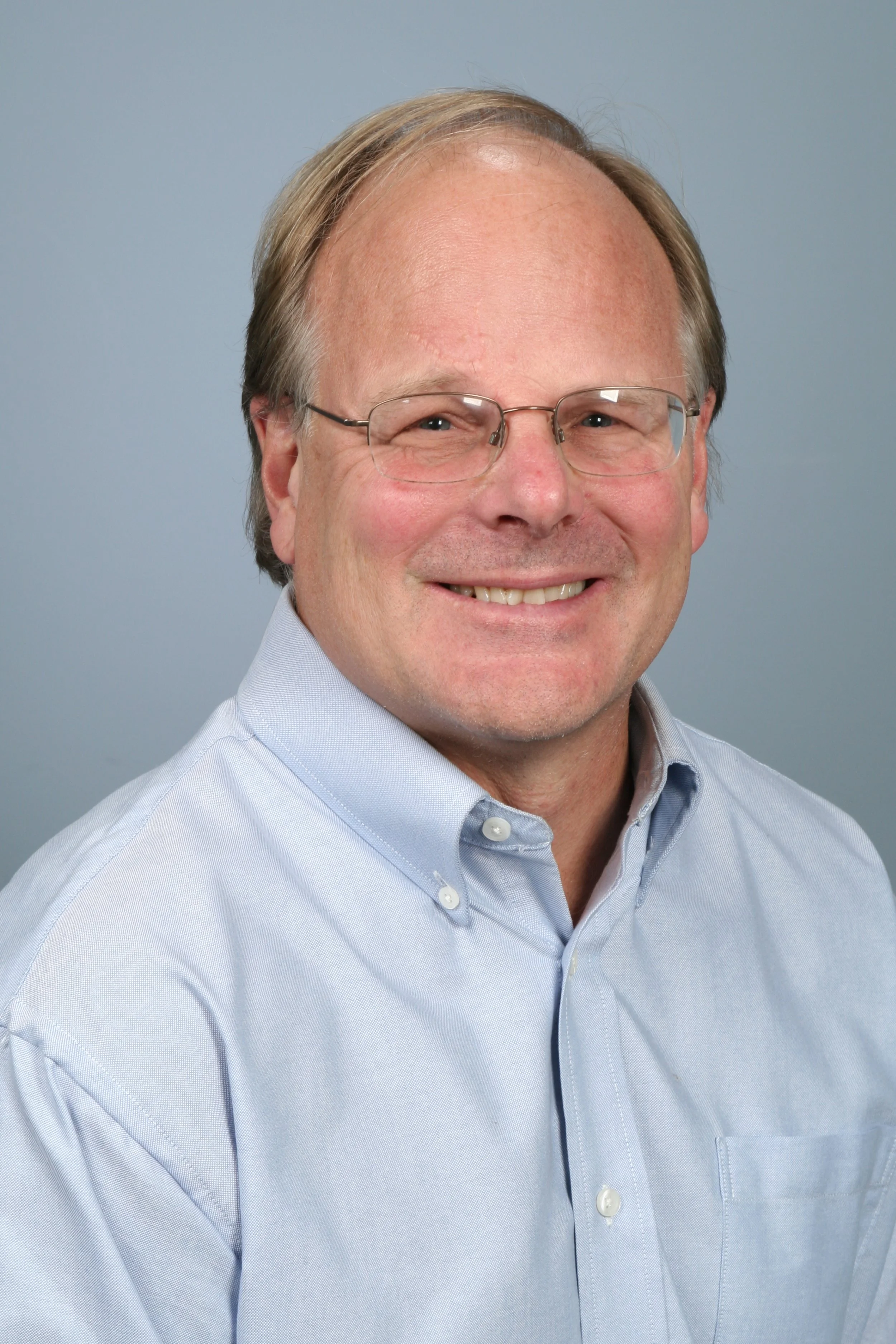
Dr. Richard Brynteson is a professor, executive coach, innovation consultant, author, and public speaker. He teaches in the MBA program at Concordia University, St. Paul, where he has been a professor of 32 years. He has published six books, on business subjects such as innovation and behavioral economics. He has worked with companies on innovation projects in Africa, Asia and the United States. He has only had to bribe his way out of jail once.