'Diana's Foresters', by Susan Shwartz
Reprinted from Highwaymen: Robbers and Rogues, edited by Jennifer Roberson DAW Books 1997
Shakespeare struggled up Gad's Hill. Settling his aching bones on the soft grass beneath an oak, he gazed down the road for Canterbury. Sweet Jesus, he was weary of this world.
He scooped up water from a nearby pool that reflected the moon's face and sighed. The walk out of London had not been long, but he was scant of breath. You're getting soft, my lad, he chided himself. He had promised his company a play that would make angry Majesty laugh. If he failed, they could face worse than the plague years when the theaters shut and honest city actors had to venture out on tour.
How long since he had truly rested? Not since last August when his Hamnet died. The grant of arms had arrived some months later to proclaim him, heirless though he now was, a gentleman.
He breathed in the country air. The midsummer night was filled with noises. Here on Gad's Hill, the city subsided into remembrance of burned-out fires, slops, bear-baitings, and the occasional charnel reek of a head crowning a pike on London Bridge.
"Why slog out to Gad's Hill, Will, a twenty devils' way? Are ye moonstruck?" Burbage protested when Shakespeare confided where he would go to seek rest and inspiration. “Midsummer night's short, and robbers ply the road. God knows what else skulks in the woods, and you'd needs be wandering about?"
Certes, a city boy. Will had roved the countryside in his own boyhood.
I am never alone. He might not have have met proud Titania by moonlight in the forest, but, then, he was no Oberon—just by the liberty of some very wretched clerks, Will Shaxper, Shagsper, or whatever. Prosperous, balding, with a share in a cry of players and the style of gentleman. None of which he could support unless he could write again.
Besides, he carried nothing that a highwayman might want, except his knife, except his knife, except his knife. Nice rhythm. He must remember it.
He cast a loving glimpse at the shadowed forest behind him. Truly, his heart lay in the countryside: young Will, tanned and lithe, quick of foot or tongue, knowing in the ways of woods or rivers. In the shadows of Avon, he had snared coneys and tickled trout and coaxed a willing woman's thighs apart.
Outwitted yourself there, didn't you?
Oh well, from that bargain pricked in the leaves, he had his pearl, Susanna, and he had had his twins, of whom Judith yet survived. And the children's mother, a good manager, a good woman, he supposed, God save the mark.
If he could have stayed in Stratford, perhaps at this very moment, he and Hamnet would be slipping out of the fine house—no, there would have been no London money to build it—well, they would have been slipping away from some house or other through the forest. His son. Shakespeare himself had been an unsatisfactory son. Perhaps Hamnet, had he lived, would have been equally unsatisfactory to him.
King Henry, whose history he aspired to write, had a noble father, old John of Gaunt, time-honored Lancaster. Had he ever lost a cherished heir, he would not have treated his son, Prince Hal, with such contempt. But surely, a hero-king demanded a muse of fire, not a worn-out playwright. A fine irony: the bereaved father must write about a father who squandered the love of a good son.
Next time, Will, try writing something easy.
Shakespeare propped his chin where the thick darns puckered the knees of his hosen. He stared at the road. Now, how far had he gotten in what envious rivals who jeered at "Shake-scene" would surely call his latest highway robbery upon Holinshed? An old king, a cold king, tormented by guilt for the death of Richard of Bordeaux (about whom the less said the better for fear of Her Majesty's fears); the prince; Ned Poins of dubious birth; assorted rude mechanicals, and a meaty comic part he dared not name after Sir John Oldcastle, for Oldcastle died a martyr, and Shakespeare had gotten into enough trouble with great families already.
Now what? It was known that the king had kept Prince Hal short of funds. Lollards such as Oldcastle were austere, which would hardly do. Make it not austerity, but debt. Shakespeare's Oldcastle ... no, what was that other name? Fastolfe...Falstaff? Good: use it.
Make Falstaff always in debt from riotous living. Shakespeare smiled to himself. That would mean at least one fine wild scene at an inn. He could write such scenes in his sleep and sometimes had. Trickier would be the episode chroniclers had always been at such pains to explain away: Prince Hal's highway robbery.
Shall the son of England prove a thief and take purses? A question to be asked—and most likely a line he would use. But why? And how would he depict in the confines of a wooden O a prince turned highwayman?
Will tried to summon up that veritable prince's guard of characters and creatures that once had spilled from his consciousness into his plays. Lately, his riot of invention had failed. I am most dreadfully attended, he had once heard a gentleman of the court complain. Another useful line.
He cupped his hand in the pool, bright with the full moon, and sipped. Falstaff would have sack and sherry and nut-brown ale to wash down his pork and his pasties and the venison he would not have been especially careful about poaching.
Back to his play.
His characters would meet at Gad's Hill. Falstaff would boast of his thefts. What should Prince Hal do?
Well, Gad's Hill provided an answer to one problem: Falstaff's quarry. Why not Canterbury pilgrims? That would provoke a laugh and prove the Lord Chamberlain's Men were no nest of papists.
Bells jingled down the road, growing nearer, sweeter, louder: bold pilgrims, traveling by night. Well, they would soon pass by Shakespeare's oak. A cloud seemed to wreathe the pilgrims: not dust, in this damp air, but a kind of halo.
He knew those pilgrims. A prosperous innkeeper, much pleased with himself and his company. A knight, a worthy man and well-tried, judging by his posture and how he sat his horse. He was served by a squire whose elegance would have been absurd if not for something about the jaw that marked him as the knight's son. A bold-eyed merchant woman whose riding dress had hiked up to expose a shapely ankle in red hosen.
Other pilgrims jingled by. Monks, priests, nuns, including a prioress, her elegantly draped black robes neatly arranged in one of the sidesaddles that Richard's Queen Anne had brought from Bohemia, fingering beads that looked more fit for dalliance than prayer. Yet the monasteries had been dissolved by order of Good King Henry, God bless his soul.
The clothes on those pilgrims! Shakespeare had worked with enough court garments in the company's wardrobe to know that clothing could last for generations, especially if metal threads were woven into the fabric. Those dagged sleeves, the quaint headdresses...no one in London had worn such garb for generations, yet these seemed newly stitched.
Most frightening was how the pilgrims' lips moved as if they laughed and spoke, but he heard only the sweet bells on their horses' harness.
Sweat prickled beneath Shakespeare's old shirt. Who were these people—or what? And why did he think he recognized them?
A man in mouse-gray velvet, a hat that covered all his head, and a discreet forked beard, reined in his horse and rose in the saddle, his head up like a hound sniffing the air. Shakespeare met the stranger's eyes and glanced quickly away, shocked by how those eyes pierced behind surfaces yet held such a kindly merriment.
"Friend?" he called.
Shakespeare had heard such accents on tour, when his company passed through villages so tiny that people seldom saw newcomers and, as a consequence, spoke a language quainter by far than London's speech.
"I spy a kinsman out there."
The traveler reined in.
His gaze fixed on Shakespeare like a forest archer stalking the Queen's deer. The man held up his hand. The pilgrims stopped. Even the bells fell silent. Dismounting, the man walked to the foot of Gad's Hill.
"I am coming up," he said.
Shakespeare leapt from the grass. His bones protested, and he turned the twinges into a yelp.
"I'll cross thee though ye blast me!" he cried.
He drew his knife and held it up, turning its hilt into a cross.
"Stay, illusion!" he commanded grandly. Herod in the old pageants could have thundered no more loudly. Words spilled from his mouth. "If there be any good thing to be done that may to thee do ease and grace to me, speak to me. By heaven, I charge thee, speak!"
"Well," said the gray man, "Benedicite."
Making the sign of the cross, he smiled.
As Shakespeare's wife Anne had often told him, curiosity would be his undoing. Still, the stranger had blessed himself.
"No smoke," said the man, "no turning upside down and vanishing in a gust of flame. I am no damned wight. By the bye," he added, "your exorcism was finely done, though your language is sorely changed from mine own."
Shakespeare saw himself reflected in the other man's eyes: the domed forehead, the one earring, the eyes that loved to look on life or beyond it. There were indeed more things in heaven and earth than the university scholars' philosophy had ever dreamed of.
"You should write those lines down and use them later."
The stranger fumbled in his pouch.
"No tablets with you? These may serve."
He produced a wad of—parchment?—and rustled through it.
"Jesu, how I suffered for these records. Robbed three times in under a week," he muttered to himself.
He chose out a few leaves and handed them over.
"I can spare these, I think. The parchment's still not quite scraped through."
Shakespeare looked down on it: scraped almost to the membrane in places, overwritten in others, and in the old spiky hand long since replaced by the Italic script favored by scholars of the New Learning, he read a name: Galfriedus Chaucier.
Or as anyone who had ever blotted half a line knew him, Geoffrey Chaucer.
Shakespeare thought of making the sign of the cross himself, then bowed instead.
"The language has changed sorely from when I walked beneath the sun," Chaucer observed amiably. "'The lif so short, the craft so long to lerne.' How do you find this changed speech to write in?"
Of all the questions Shakespeare might ever have expected from a fugitive of a Faery Rade, that was surely the strangest. Placing hands on his hips (one clutching the precious wadded parchment), he burst out laughing.
"Here is God's plenty, Master Chaucer!"
The man raised an eyebrow, and Shakespeare remembered that he had been schooled in the royal courts of England, France, and Italy. Another bow was called for and an introduction.
"One William Shakespeare, late of Stratford-on-Avon, shareholder in the Lord Chamberlain's Men, bearing the style of gentleman."
Chaucer bowed in return, those deceptively mild gray eyes placing Shakespeare for all time.
"Excellent well: we are both gentlemen. What is more to the point: we are both poets, though you are of the quick and I...ah...nonetheless, we are brother poets, and your need summoned me this Midsummer Night."
Shakespeare had summoned him? Day and night, this was stranger than even he had dreamed in his play of Midsummer Night.
"It is you who can command me," said Shakespeare. "You who are brother-in-law to the Duke of Lancaster."
"Ah, bless his third wife, the Lady Katherine," said Master Geoffrey. "Sweet Kate and her sister, my Philippa, a very sour pippin indeed. But a good woman for all that, God rest her soul."
A little weak in the knees, Shakespeare sat again and gestured to the grass beside him. Chaucer pulled a cup from that capacious purse of his, scooped up water, and offered it to Shakespeare. The moon in miniature bobbed in the cup like a toasted crab, and the water's taste was sweet.
"What is it that you write?" asked Chaucer.
"Words, words, words," said Shakespeare. "Some poems in the mode of Petrarch--" Chaucer inclined his head—”but mostly plays."
"Pageants?" Chaucer raised a brow.
"Far more than that," Shakespeare gestured, trying to create for this poet lost in time the playhouse that he loved, the grounds of groundlings, the dangerous young gentlemen seated on the stage, vying with the actors. "I seek to tell the tale of Prince Hal, Henry, the fifth of his name."
Chaucer crossed himself.
"I served his great-grandfather."
He paused.
"Who is the king now?" he inquired, circumspect as a practiced courtier.
"A virgin queen," said Shakespeare, enthusiastic as all London. "A great and puissant lady, descended from King Arthur himself."
"In th'olde dayes of the Kyng Arthour, of which that Britons speken greet honour, Al was this land fulfiled of fayerye."
Chaucer's eyes twinked as he recited his own verse. So that was how the old tongue sounded!
"It is not Faery or such vanity that I write but history. Her Majesty was not precisely pleased with my last play about the fall of King Richard."
Chaucer shook his head.
"I would think not. Well, then, what is the one? One night a year of liberty does not give me fresh news. Does England still fight the French?"
"We fought Spain," Shakespeare told him, striving to compress the long, long tale of years into a prologue clever enough to offer the old master.
"Ah, the world is much changed from my own. I am glad I walk no more beneath the sun. Tell me, this play of yours: Henry, you said, ruled France as well as England?" Chaucer's face lit. "I knew him as a boy – a promising lad, much favored by his grandsire."
"It is a hard tale to write," Shakespeare faltered, oddly shy.
"Well, what do you have, sir? Show me!" Chaucer gestured. "Otherwise, why summon me? Show me your work the way I have shown you mine!"
He gestured at the pilgrims on the road below: silent, motionless, frozen in a spell of dreaming. Even the stars seemed to pause in their twinkling.
"Come, man," coaxed Chaucer. "I'm safely dead, I cannot steal your play. Show me. Use the moonlight."
Stranger things had happened at Midsummer. How the moonlight glimmered in the pond, on the road, even haloing Chaucer's pilgrims. The light seemed palpable. Shakespeare put his hand out into its beams. Flesh and bone tingled.
He gestured. The moonlight coalesced, and a character began to form. Tall. Lean. Shabby, but possessing some smatch of honor. Shakespeare gestured again, lightening the character's hair.
"Edward Poins," said Shakespeare. "My Ned. Companion to the prince. A fork, feeding Prince Hal his lines."
Chaucer again raised a brow.
"You make him Plantaganet in seeming. Come, sir, would you defame a king?"
"I defame a prince, making him a highway robber."
The Chaucer-apparition almost choked on another sip of the moonlight-laced water.
"I would hear that story."
Shakespeare looked up at the moonlit sky.
"Have we not all night?"
"Show me your other players," Chaucer demanded.
Shakespeare's hand on the moonlight was surer now. Peto appeared and Bardolph, down at heels, at knees, at elbows, grotesque of nose and codpiece, and poorly armed. Chaucer grimaced.
"Excellent. And their master? I knew Sir John Olcastle, a very worthy man."
Lovingly, Shakespeare gestured. A stocky figure formed, sagged, grew gor-bellied, bowed of leg, fat of rump, bulging in a stained, torn doublet that had surely seen court service long ago. A hat with a tarnished feather perched on hair combed to hide its thinning: crafty little eyes, much reddened, but dimmed to ember by the magnificent crimson bulbous nose, its purple veins mapping their owner's dissipation. If a mummer's bear could guzzle sack in human guise, this was surely he.
"Falstaff," breathed Shakespeare, proud as the first time he held his son.
Chaucer studied this last, best creation, his face expressionless by design, the ancient rogue.
Subtly, Shakespeare gestured. The character turned and winked at the two poets. A monumental belch emerged somewhere from the depth of that belly, shaking Jack Falstaff's frame.
"Now, Hal," he boomed, "what time of day is it, lad?"
Chaucer slapped his thigh and chortled, holding up a hand.
"I beg you, spare us! You'll set him farting next. and the night air is far too sweet. Set your fat, aging misrule to act!"
"I thought," Shakespeare began, "I would have him rob some Canterbury pilgrims."
"What?" demanded Chaucer. "My young prince, a robber? I thought you cozened me. Did that happen in good sooth?"
Shakespeare shrugged.
"In legend."
"Think, man. What turns a good man into a robber?"
He looked at Shakespeare, then whistled a ballad he had known since boyhood.
"Robin Hood!" he exclaimed. "You can rob from a robber...so..."
He slapped his knees.
"Falstaff robs the pilgrims. Then the prince robs him!"
Shakespeare gestured. The figures moved, arguing, laughing, drinking.
"Let the prince protest, at least," said Master Geoffrey. "I know he is no robber."
"But the scheme for him to rob Falstaff?"
Shakespeare would regret discarding that.
"You have your fork, Ned Poins. Have him feed it to the Prince."
Shakespeare set his head upon one side.
"How do like you this? 'I have a jest to execute that I cannot manage alone...'"
Chaucer nodded.
"Now, draw the action out."
How much easier it was to block a scene in moonlight than with living, breathing, arguing actors. Ned Poins proposed the jest. He and the prince would hide, disguised in buckram, wearing masks. Invention was easy enough to come by in such small things, but ..."
"Wherefore, you ask," Chaucer broke in, making the moonlight figures quiver, "should they do this?"
Shakespeare laughed as he had not laughed since word had come of his son's death.
"I have it."
He drew breath and spoke again, in a high, young man's voice, mimicking a young blade trying to ape the better-born.
"The virtue of this jest will be the incomprehensible lies that this same fat rogue will tell us when we meet at supper: how thirty, at least, he fought..."
Chaucer nodded.
"Write those words down, man."
Shakespeare bent his head and scribbled, aware of the old dead poet peering over his shoulder.
"I have it!" Shakespeare cried. "We start with Jack Falstaff. He's fat and scant of breath. The young men press him hard. They hide his horse, the wretches, and he can go no further."
The moonlight figure staggered, lurched, threatened to break wind, and bellowed for his horse.
Chaucer laughed.
"Now what?"
"Now," said Shakespeare, "enters the prince."
A sudden hesitation seized his hand. Chaucer had known Prince Henry. Gently, he stretched out his fingers to grasp moonlight. A new figure materialized: young, handsome, grinning now, but with hints of resolve around the mouth.
"His father was taller," said Chaucer. "His grandsire taller yet."
"Look ye, if the man who retakes France prove not every inch a king," Shakespeare replied. "Now, let it work. Mischief, thou art afoot!"
He gestured again, releasing his characters. Prince and Poins slipped away, hands over their mouths so they would not giggle like the mad boys they had been scant years before, withdrawing into the woods to find their buckram and vizards, masking themselves, drawing swords, each shaking his head at the spectacle the other cut.
"You would bring Jack Falstaff forward on your stage?" Chaucer asked.
"And off, still complaining. Then, just as he thinks he has gotten safely away..."
Shakespeare brought down his hand as sternly as if commanding a flight of arrows at Agincourt.
Poins and the Prince leapt forward.
"Your money!" cried the Prince.
"Villains!" shouted Poins.
Shakespeare swore and cried in the deep cracked Falstaff voice he knew his company's best comic would use. Words bubbled from his lips, a fountain of lines to set the groundlings in a roar plus bits of business that would even make the gentles laugh.
He gestured, demonstrating to Chaucer the blocking – how the actors would shout and chase around in circles, then run off-stage. They would come crashing through the "woods" on stage, fatter and sloppier than Demetrius and Lysander when Puck bewitched them. A pity he could not bring Puck, the merry wanderer of the night, into this play, but it must be the history of a great prince, not some mad tale of Faery.
The prince pulled off his mask. He turned away from the running figures and spoke to Poins.
"Got with much ease. Now merrily to horse. The thieves are all scattered, and possessed with fear so strongly that they dare not meet each other: each takes his fellow for an officer. Anyway, good Ned: Falstaff sweats to death and lards the lean earth as he walks along. Were't not for laughing, I should pity him."
"That's my prince!" Chaucer laughed until tears glistened in the moonlight on his face, then dropped onto the earth.
"Who's there?" The prince's voice shifted fast from laughter to taut watchfulness. He had served, Shakespeare had remembered, on the Border when he had been scarce more than a lad.
"Your change of tone—I think it was too abrupt there," Chaucer whispered to Shakespeare.
Shakespeare shook his head.
"I did not write that line."
"I asked, 'who's there'!" the prince repeated himself.
He drew his sword and stalked up the hill. It was clear from the way he held it how lax he had actually been in the mock assault on Falstaff.
"If you are thieves in truth, surrender to a trueborn prince."
This was no longer play, but business.
"I never wrote those lines," Shakespeare whispered.
He looked down at his knife. What use was cold steel against a spirit? And how would he dare draw upon a true-born prince?
Besides, this young man was schooled in war. Robbing Falstaff had been the jest. This was serious.
Shakespeare flashed a glance at Chaucer. The older poet gestured, Let me handle this.
Shakespeare gestured back. With all my heart.
Chaucer rose from cover and bowed deeply. The angry prince recoiled.
"Master Chaucer?" he exclaimed before crossing himself fast. "I lit mass-candles for you myself. What prodigy is this?"
"No prodigy, my prince," said Chaucer. "A poet at Midsummer."
Prince Hal glanced about.
"This land is sadly changed. And that gangrel creature beside you..."
Chaucer laughed.
"He is the poet who summoned me."
Prince Hal raised his sword.
"You, sirrah! Can you call spirits from the vasty deep?"
Shakespeare shook his head. Just let him survive the night and he would appropriate that line for Owen Glendower, whose talk of the moldwarp and the eagle harked back to Merlin's prophecies.
"They never answered if I did, highness," he told the apparition. "At least, not until this Midsummer's Night."
Chaucer had started down the slope. He started to sink to one knee, reaching for the prince's hand, but Hal swept him into an impetuous boy's hug.
"Midsummer Night, my prince. Spirits walk abroad. And you, of Arthur's blood, are cloaked in magic."
"You look no different from when I was a boy," the prince told Chaucer. "No older. But I am now a man...sweet Lord, how long?"
Awareness and the beginnings of fear dawned in his eyes.
"We have lain i' the earth nigh two hundred years," Chaucer told him.
Both spirits crossed themselves. The prince turned toward Shakespeare.
He had summoned magic he had not understood. Let the great ax fall, if fall it must. At least, he had seen what he had seen. And he had traded verse with Geoffrey Chaucer. There were worse ways to go.
The air fell silent as he waited for the Prince he had raised from moonlight to pass sentence upon him.
"Lad...I mean, my prince,' Chaucer began, but Prince Hal waved him off.
"You did not mean to rob me of my rest, but..."
Dogs erupted, barking, from the forest. The little dogs, something danced into Shakespeare's consciousness, Tray, Blanche, and Sweetheart...Please God, he would live to use those words. Those were names for ladies' dogs such as Chaucer's prioress would overfeed. They were not names for the dogs he saw now, lithe, muscled things with red ears and green, glowing eyes.
"Benedicite," whispered Geoffrey Chaucer.
It was Prince Hal's turn to cross himself.
Those two were older than Shakespeare, closer to the land. They knew the stories, knew whose red-eared, green-eyed dogs coursed the forest at Midsummer. Had Shakespeare invoked Oberon and Titania? Older spirits than they and far more potent than their Puck roamed these woods.
He who ruled them all emerged from the trees, dressed as a simple hunter except for the crown he wore, wrought of twisted horns.
Shakespeare drew his knife. On such as he, perhaps cold iron...
"Get behind me, masters," came the prince's voice, as cold as on a battlefield.
"My prince, let me shield you!" cried Chaucer, who tried to push between Prince Hal and the Horned King.
The young prince stepped away from him.
"I am prince and belted knight. It is for me to protect men in my grandsire's service. You too, Master Shake-scene."
Now, where had he gotten that name? Shakespeare wondered.
The prince stepped forward, his gaze never leaving the shadows that masked the Horned King's eyes. He knelt in homage.
He held his sword across his knee, hilt toward the Master of the Wild Hunt, as if he presented his blade to the king his father in fealty.
The Horned King smiled austerely.
"Well done," he said. "And you, master poets. Your creations are powerful."
"I thank you, Master," said Chaucer.
Shakespeare laughed somewhat uneasily and made as if to kneel beside the elder poet.
"See thou do it not!" commanded the Horned King in a voice as sere as the last leaves that clung to a winter bough. "For are we not all England—I to rule its nights, you to shape its dreams?"
Shakespeare bowed his head. The figure glimmered through his tears.
"You, Master Chaucer. You begged leave of me to answer this man's call. But he has years left, and dawn is near. Are you ready to move on?"
"Master Chaucer is buried at Westminster," Shakespeare protested.
For that matter, so was the prince kneeling in homage before the oldest king of the land.
"Ah, yes," said the King. "But once a year, he rides out with me on pilgrimage. How should it be otherwise? He loves this land as he loves his God, and both have their claim on him until world's end. Why should there be any less mercy to the blessed than to the likes of Judas? Even he, you recall, has leave to cool himself on the ice each Christmas? Why should my Geoffrey be denied his midsummer night?"
"For that matter," he added, "why should you? My court has a poet, but lacks a modern playwright."
Curiosity spurred Shakespeare hard. But never to see his plays performed, never to write another? Never to watch the faces of the audience light up and hear the crowds roar, the coins clatter in the till? Or see his daughters smile?
Shakespeare shook his head. The Horned King smiled.
"I wish I might have seen your play," said Master Geoffrey.
"Come back next year," Shakespeare invited. "We'll have one other gaudy night. You too," he nodded politely – after all, was he not now styled a gentleman – at the Prince of his creation and the King.
They bowed to one another. The Horned King beckoned. The prince rose, bowed, and withdrew into the forest. Chaucer walked down the slope. Shakespeare heard the jingle of bells and harness from the rank of pilgrims. They faded into silence.
The summer mists rose and brightened. He yawned. Just a few moments' nape before he returned to town. And to write again...
# # #
Shakespeare woke with a jolt that set every bone to lamenting.
"And I awoke," he muttered a line from an old ballad, "and found me on the cold hillside."
He was too old now to sleep out of doors. His scanty hair was matted, his stomach as dry as if he had drunk too much though he had drunk only water from the pool. A battered cup lay nearby, filled with leaves. Oak, ash, and thorn. In a circle around him, the grass had been trodden down. He still could see the pawprints.
"I have had a dream," he murmured to himself, "past the wit of men to say what dream it was. Me thought I was—there is no man can tell what. Methought I was, and methought I had—But man is but a patched fool if he will offer to say what methought I had."
Shakespeare rose, one hand to his back. Strangely enough, it no longer ached. Something tumbled out of his pouch, and he bent to pick it up...a wad of parchment, somewhat greasy and much scraped over so that the morning sun shone through it.
"Galfridus..." he read in old fashioned letters, followed by lines Shakespeare could not remember having written, but that he knew were his every bit as much as the two children who lived in Stratford and his heir buried there. He shook his head.
"The eye of man hath not heard, the ear of man hath not seen, man's hand is not able to taste, his tongue to express, nor his heart to report what my dream was."
He glanced down the page at the words, the wonderful, funny words. More words yet sang and thundered in his head. He knew now he could remember them and would write them and more besides.
The summer air grew warm as dawn brightened. Insects and birds sang. Shakespeare turned back toward London Town. Behind him, more than just the water chuckled.
Exeunt Omnes
Susan Shwartz, formerly a VP in Wall Street marketing communications, writes fantasy, science fiction, historical fantasy, military science fiction, and horror. She is a five-time nominee for the Nebula, a two-time nominee for the Hugo, with nominations for the World Fantasy Award, the Philip K. Dick, and the Edgar.
Susan has published around thirty books, including anthologies, science fiction, historical fantasy, STAR TREK, and job hunting. She has also published more than 100 short stories, novelettes and novellas and published nonfiction in THE NEW YORK TIMES, VOGUE, THE WASHINGTON POST, AMAZING, ASIMOV'S, and ANALOG. Moving into work based on art collecting, she has published an article on The Butler Institute for American Art for JOURNEY PLANET. Her short fiction includes stories on subjects as diverse as the Soviet Space Program, Eleanor of Aquitaine, Himalayan-level climbing, the Battle of the Bulge, genetically resurrected thylacines at a women's college, and some seriously creepy pieces on suburban Connecticut. She has recently sold stories about Achilles in the Underworld, Shoggoths in Antarctica during a climb of Mount Vinson, and a retelling of “The Lady and the Tiger.” She maintains a SubStack column in which she writes about polemics, semantics, and pop psychology just because.
She holds a Ph.D. in English from Harvard and a B.A. from Mount Holyoke and has studied at Dartmouth College and Oxford University. With her partner, she collects SF art and indulges in opera, theatre, and travel. Currently, she is working on an opera, “Drawing Down Leviathan,” with composer Brian Robison.
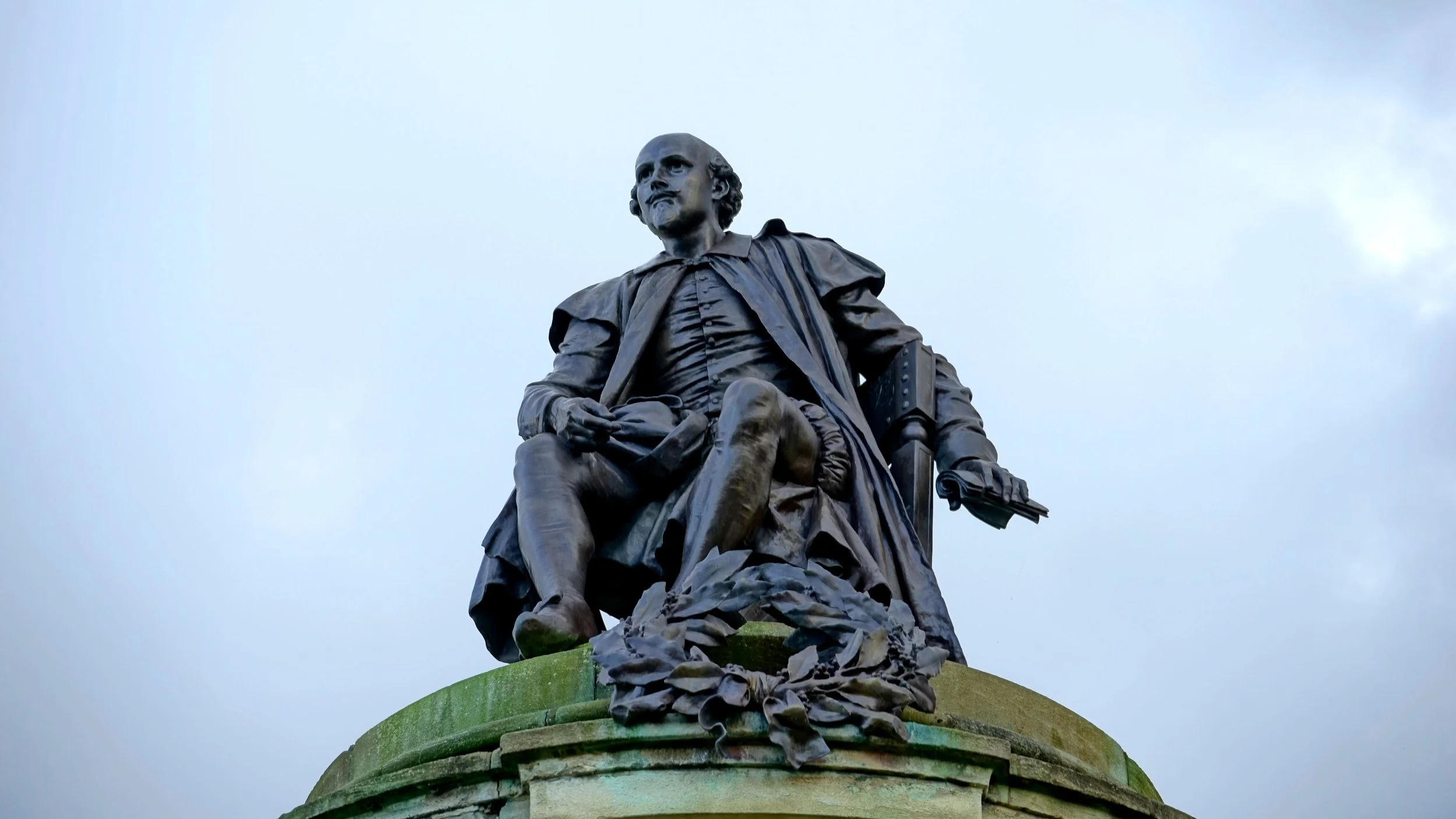
Photography by Mike Bird