'The Staples Stories: I, II, & III', by Paul Illidge
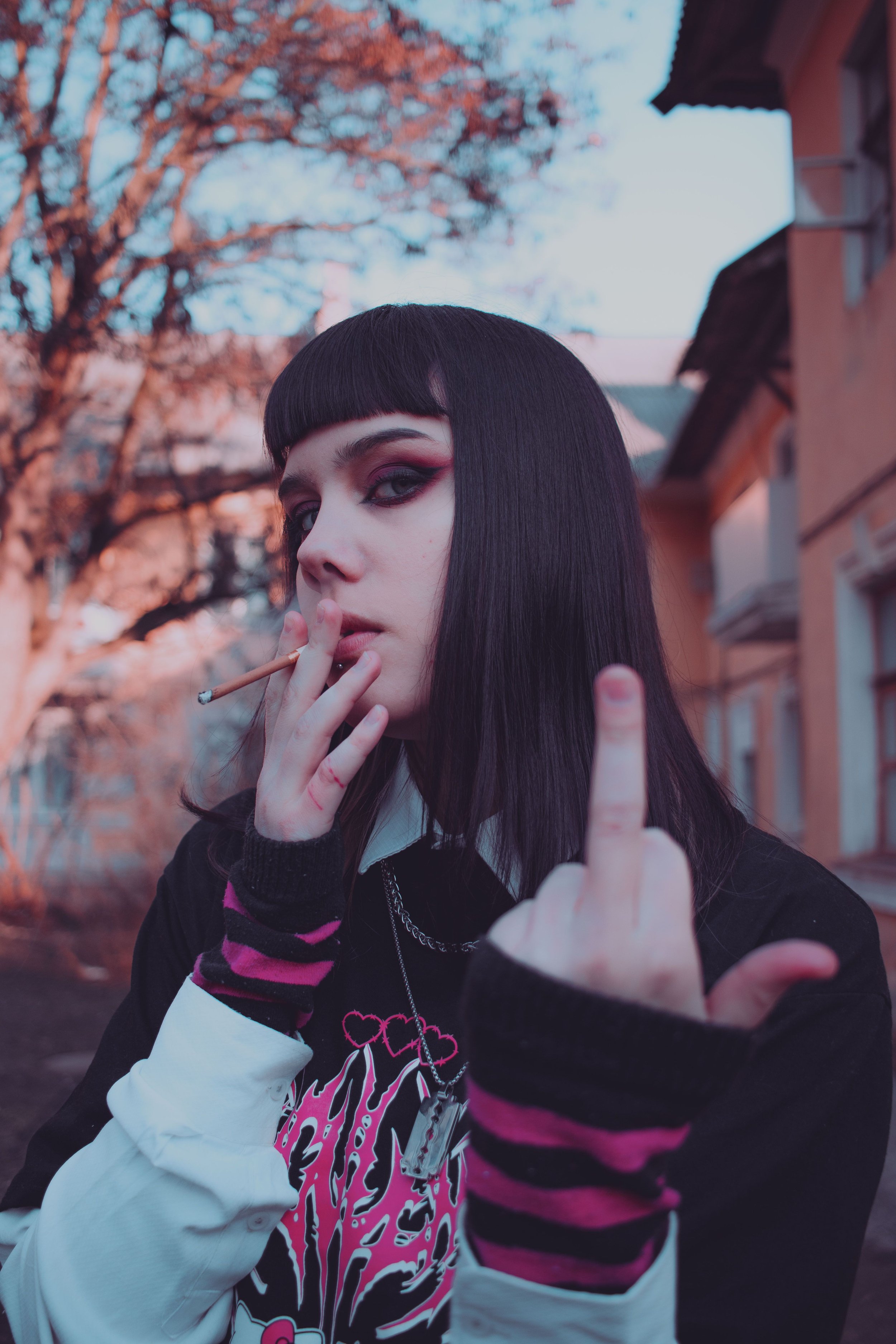
I. I Am the Dead Girl
I am the dead girl whose locker you spat on somewhere between recess and lunch.
I’m not really dead, but I dress like I want to be. There’s something generic about girls like me: we hate the sun, we wear black, and we feel trapped inside our bodies like a nylon fur mascot at a football game. I wish I were dead most of the time. I wish I were a ghost.
And FYI, I’m not in school anymore, but the spitting thing was real: a little moment that sums up my life. I work at Staples. I’m in charge of restocking aisles 2-North and 2-South: Stationery, Notebooks, Post-It Products.
Do I hate this job? Are you nuts? Of course I hate it. How could you not hate it? Everyone who works with me is either already damaged or else they’re embryos waiting to be damaged, fresh out of school and slow as an early 2000s dial-up. Just because you’ve been born and made it through high school doesn’t mean society can’t still abort you. Wake up! I want to tell them.
Let me try to say something here. For balance.
Staples does allow me to wear black lipstick to work.
So I was waiting for the bus this morning, and there was a sparrow sitting in the azalea plant beside the bus shelter. I looked at it and it yawned . . . this tiny little wisp of heated sparrow yawn-breath rose up from the branch. And the thing is, I began yawning too—so yawning is contagious not only from person to person, but from species to species. How far back was it, I wondered, that our primordial ancestors forked into two directions, one that became mammals, and one that became birds? Five hundred million years ago? So we’ve been yawning on earth for half a billion years?
Speaking of biology, I think cloning is great. I don’t know why churchy people get so upset about it. God made the originals, and cloning is only like making photo copies. Big woo. And how can people get upset about evolution? Someone had to start the ball rolling. It’s only natural to try to figure out the mechanics of how it got rolling. Relax! One theory doesn’t exclude the other.
Yesterday this guy from work, Roger, said it was weird that we human beings, who’ve evolved way more than anything else on earth, still have to share the place with all the creatures that remain un-evolved, like bacteria and lizards and bugs. Roger said human beings should have a special roped-off VIP section for people only.
I got so mad at him for being such an ignorant shit. I told him that roped off VIP areas do, in fact, exist, and they’re called parking lots—if Roger wanted to be such an environmental pig about things, he should go stand in the parking lot for a few days and see how much fun that is.
Calm down, Sarah. Look out the window.
I’m looking out the window. Looking at plants and birds cools my brain.
It’s late afternoon right now, and the crows from everywhere in the city, maybe a thousand or more, are all flying to roost for the night in their mega-roost, an alder forest out on the highway. They go there every night, and I don’t know why. They’re party animals, I suppose.
Crows are smart. Ravens are smarter. Have you ever seen a raven? They’re like people, they’re so smart. I was fourteen and collecting seashells up the coast one afternoon, and a pair of ravens landed on a log beside me and followed me around the beach, hopping from log to log. They were talking to each other—I mean chatter-chatter talking—and they were obviously discussing me.
Ever since then, I’ve firmly believed that intelligent life exists everywhere in the universe, that it’s designed specifically to foster life wherever and whenever possible.
I also think that if ravens lived to seventy-five instead of seven, they’d have conquered the planet millions of years ago. They’re that smart. Raven intelligence evolved differently than human intelligence, but it still reached the human realm. Aliens may well think and behave like ravens or crows for all we know.
And a final thing about crows—I had no idea I’d be going on like this—is that they look black to us, but to birds they’re as insanely coloured as parakeets and peacocks—human colour perception is missing a small patch of the spectrum that only birds can see.
Imagine if we could see the world like birds, if only briefly. Everything would be wondrous. Which is another reason why I only wear black. Who knows what you’re missing when you look at me.
It’s five minutes later.
My mother called and asked if I would consider going with her to visit the Hubble Telescope in California. I thought the Hubble was in outer space, but it turns out it has a twin, Yreka, in northern California.
My mother said people who didn’t believe in anything, after visiting the Hubble came away feeling proud to be alive. She said that, instead of the stars being these mean, cold, bleak little jabs of white light, the universe was like a vast, well-maintained aquarium. The stars weren’t points of light, but angelfish and jellyfish and sea horses and anemones. And I thought about it, and damn the woman, she could have been right.
The trouble is, I told her, people always treat me like an alien, and that I’ve always expected to be treated as such, and it’s not a very glamorous sensation.
This, naturally, sparked a fight with Mom.
Why can’t you try to fit in?
I’m still wearing black lipstick at twenty-four, Mom. I thought you would have abandoned hope of my ever normalizing.
After we hung up, I thought: If she’d died right there and then, the last thing she would ever have said to me would likely have been: The universe is a beautiful place, Sarah. If you doubt me, go check for yourself.
II. What the Hey!
Sorrow!
Sorrow is everywhere—a bruise that never yellows and never fades, a weed that chokes the crop. Sorrow is every old person who ever died alone in a small, shitty room. Sorrow is alive in the streets and in the shopping malls. Sorrow in space stations and theme parks. In cyberspace. In the Rocky Mountans, the Mariana Trench. All this sorrow.
And here I am in the cemetery eating my lunch: baloney on Wonder Bread, too much yellow mustard, no lettuce or tomato, an apple and a beer. I believe that the dead speak to us, but I don’t think they do it with words. They use the materials they have at hand—a gust of air, a small ripple on an otherwise still lake, or hidden inside a dozing stem some sap is tickled and a flower blooms that would never have opened otherwise.
The sky rains and the world shines, rows of tombstones, the grass like glass. There is a breeze.
Maddy tried to be matter-of-fact about it all when she got the news: cancer of the spleen. What the hell is a spleen? A spleen is a cartoon body part, not something a real person has, let alone something that gets sick and kills.
She tried to tell me that everybody who’s ever lived has had cancer lots of times—even a foetus gets cancer—except our bodies almost always get rid of it before it spreads. Cancer is what we call those bits our bodies fail to slough off. I found some comfort in that. It made cancer feel everyday and approachable. Universal. I wanted to reach inside Maddy and pluck out the cancer—and maybe while I was there I’d remove gold coins and keys and tropical birds—and show you the surprises all of us conceal within.
I think emotions affect your body as much as X-rays and vitamins and car crashes. And whatever it is I’m feeling right now, well, God only knows what parts of my body are being demolished. And I deserve it. Because I’m not a good person—because I’m a bad person who also happens to be lost.
Oh! to travel back ten years—to when I still thought of myself as a good person and before I realized I was lost. Every moment felt like I was getting away with something. Every moment felt like five o’clock quitting time. Paradise!
You know how I met Maddy? I was coming back from lunch one day with Alex and Marty. I’d had three glasses of red, and I knew it wouldn’t be too smart to show up at the office—it was the tail end of the days when you could still plausibly drink during lunch and not immediately be suspended, and I didn’t want to push it—this was my third job in five years.
So I pretended I had to pick something up from the dry cleaners. It was a sweater-optional weather day, and the sun came out from behind a cloud and I was standing at the corner of Sherbourne and Drake in a wonderful liquid yellowness. I felt like I was being teleported to the sun, and the heat on my skin felt like music. Then the sun went behind the clouds, and I felt like I was locked inside an airliner’s bathroom. And then I closed my eyes and opened them again and across the street was a woman holding up a sign: Fortune Teller.
What the hey! I thought and, on an impulse walked over, laid down a five and said, “Fill me in.”
The fortune teller certainly wasn’t cultivating an aura of mystery. She dressed like her welfare check had just arrived and she was off to buy a carton of smokes for her six illegitimate toddlers: sweat pants, no makeup, men’s worn brown leather shoes much too big for her feet.
But I still wanted my fortune told. It’s a mood you get in maybe once a decade, like a thirst, and once you have it, you have to slake it. So I pressed forward.
“What can you tell me?”
She looked at me like I was homework.
She grabbed my hand, pressed the meat of my thumb for a few seconds, looked up at me and said, “I see you sitting in a glade, all of the creatures of the forest sitting around you. There’s a blue jay on your left palm, a black squirrel on your right—it’s dozing—it’s resting, completely at peace by the look of it.”
That’s not what I was expecting, but I liked the way the words made the inside of my head feel.
She looked down at my palm, then back up at me and went on: “You were trouble as a teenager, and you probably pushed your parents too far, and they probably gave you up for lost.”
She was good.
She said, “You were about twenty, and you saw something that scared you into changing your ways. What was it?”
“Aren’t you supposed to be telling me?”
“A car accident.”
Shit, she was good.
“How many people were killed?” she asked.
“Four.”
“Four people—and afterwards you went to your parents’ house. You said to them something along the lines of, Mom, Dad, I’ve seen the error of my ways, and I’ve decided I no longer want to be the person I was before. I’m going to be someone new now, someone better, somebody I can respect. Your mother cried.”
Traffic and people thrummed around us, but they might as well have been on a TV muted in the background. I didn’t know what to say.
“The thing is,” she continued, “you changed only a little bit, and only for a little while. You lacked the courage to follow through on the criminal promise of your teens, and you were too lazy to become a genuinely good person. You wonder why I look at you funny, well, now you know why.”
I was tipsy, so I said, “I know about my past. Tell me about my future.”
She said, “What am I supposed to tell you—that your future is going to be different, or better? I can’t, because you’re never going to change. You may have a red-haired son and a left-handed daughter one day. You may be stung by a jellyfish in Mexico and die within an hour. But so what? In your head, you’re this neither-here-nor-there person. The experiences won’t change you. Who cares?”
She continued, “You think I’m trailer trash, but what of it? I have a certain power, but having it doesn’t mean I have to embrace it. Most of the time I reject my powers, but today I needed money, and that money is going to come from you. A hundred dollars. Pay me now.”
“Why should I?”
“Because otherwise I’ll tell you even more things about yourself you’d rather not know. Buy my silence.”
I did.
She folded up my five twenties and her card table and walked away.
Then, from behind me, a woman’s voice said, “I bet you like animals.”
I turned around and there was Maddy, with a Jack Russell terrier on a leash straining to sniff curb-side newspaper boxes.
“Huh?”
“Animals. I bet you talk to animals all the time, whenever you see them. Like right here, right now.”
She looked to be the same age as me, but without the mileage. She looked almost like Jennifer Aniston from Friends, same blue eyes, same blond hair, same radiant smile. She saw that I was maybe a disaster, and yet she approached me. She began our dance together.
I looked at her dog, which she introduced as Astro.
“Hey there, boy. Yeah, I do love animals.” I squatted down, scratched him behind his ears. “Why would your mistress be telling me that?”
“Why?” she asked. “Because people who talk to animals are people who are disinhibited. Certain situations take them out of themselves—talking to animals, talking to fortune tellers. A fortune teller gives you permission to relax and not keep everything plugged up inside. You can tell them anything. And once it’s over, back in goes the plug and you feel better for having vented.”
“You heard her?”
“I couldn’t help it. Young Astro here had to do his business, and I had to wait.”
“She saw you there, listening, the whole time?
“Yup.”
“And you still want to talk to me?”
Brendan indeed has red hair, and his sister Zoë is left handed.
But I’ve never gone to Mexico, never will.
III. Long as You’re Not in the Wind (Dreams Can Come True)
Not the best day.
This morning I had one of those from-hell wake-ups where all you can think of is fear and loss and the people you’ve hurt and all the damage you’ve done. You put your hand out from under the sheets and the air is cold. It’s like not wanting to be born. And then, finally, your head can’t stand lying there thinking anymore, so you jump up and run to the bathroom and put your head under the shower’s jet, hoping it will fuzz out the feelings, but instead there’s only a tiny amount of diversion.
I get older. I grow old. Somebody starts to tell me about their latest dream and I get so bored working here at STAPLES I have to escape. I flee to the craft superstore down the street from the hardware superstore, down the parkway from the office superstore. I wander its aisles, looking for the seed of an idea to help me escape from myself—I walk past artificial lilies and unpainted birdhouses and crewel kits that allow me to make images of golden carp swimming in Tokyo ponds.
And then, in the scrapbooking aisle, I see 79 cent sticker packs with little rainbows and unicorns that say DREAMS CAN COME TRUE! And it makes me want to cry the way we feed nonsense fantasy crap like this to kids, who are going to inherit a century of ugly wars started by people who died long ago, but who were sick and damaged enough to transmit their various hatreds down through the centuries. Dreams don’t come true. Dreams die. Dreams get compromised. Dreams end up dealing crack in a booth at the back of The Olive Garden.
So there you have it—that’s been my day until now. The Dell shipment got stuck at customs and won’t be arriving until tomorrow, so I’m going to have a vodka snack and pretend to help customers in the office furniture department. Then I’ll probably go through the aisles and look at all the plastic crap we sell and wonder about the chemicals in it, and what leftovers were flushed into the water system during manufacturing. I sometimes get the feeling we’re having full-time, one-on-one unprotected sex with the twenty-first century, exchanging fluids with the era: antibiotics, swimming pool chlorine, long-chain molecules, gas fumes, new car smell—all of it one great big condom-free love-in.
A half-hour later: Pete is away this afternoon, so we’re all slacking off like crazy. We drew straws to see who works the till, and Kyle lost. I went down the road and bought a bottle of rot-gut vodka and am going to continue work on my postmodern novel Mx Bovary out in the loading bay. It’s warm out there as long as you’re not in the wind.
Poetry, fiction and creative nonfiction by PAUL ILLIDGE have been published in The Antigonish Review, The Fiddlehead, Grain, Open Minds Quarterly, New English Review, Toronto Life Magazine, Mental Health Talk, Exile, Dumbo Press, Sybil Journal, Adelaide Literary Magazine, Obsessed With Pipework, Eunoia. At present he is writing a comedy for the stage YOU CAN'T GET THERE FROM HERE.